
A neocloud operator's term sheet crossed my desk last month. On page 34, the collateral schedule valued its H100 fleet on a six-year straight-line depreciation. On page 41, the same document disclosed a covenant tied to secondary-market GPU pricing. The two numbers implied economic lives that differed by roughly three and a half years. No lender on the call asked why. That silence is the most expensive line item in the entire AI capital stack.
Chris Wood, the global equity strategist at Jefferies, told clients last week that the US artificial intelligence boom could terminate in "massive capital destruction." Most coverage reduced this to a headline. The strategist is bearish, the headline is scary, the market shrugged. What got lost is the mechanism. Wood is not making a technology call. He is making a financing-structure call, and the financing structure of AI compute has quietly migrated into the same leverage architecture that detonated crypto in 2022.
I spent the 2022 collapse auditing the wreckage — 300-plus lines of Solidity a day, reverse-engineering why lending protocols failed when volatility spiked. The pattern was never the asset. It was always the collateral assumption. AI is now running the identical script with different tickers.

Context: What Actually Changed
Wood's warning, as relayed by Crypto Briefing, rests on three pillars: the debt-heavy nature of current AI investment, competitive pressure from low-cost Chinese models, and a presumed gap between AI revenue and AI capital expenditure. Each is defensible. None is quantified in the piece. That is characteristic of strategist notes — "massive capital destruction" is a phrase engineered to be memorable and unfalsifiable. No timeline. No threshold. No trigger condition. Code doesn't get that luxury. Code either reverts or it doesn't.
But the underlying thesis deserves more rigor than the headline gave it, because the financing structure genuinely did change between 2023 and 2025.
Through 2023, AI infrastructure was funded by the operating cash flow of five or six hyperscalers. Microsoft, Google, Meta, Amazon — these firms could spend $40 billion a year on capex and still return capital to shareholders. When your compute buildout is funded by free cash flow, the downside case is a lower return on capital. It is not insolvency.
By 2024 and 2025, incremental AI capacity increasingly came from somewhere else. Neoclouds like CoreWeave and Nebius levered up to buy GPUs. Datacenter developers spun up special-purpose vehicles to isolate project debt. Private credit funds — the same asset class that spent 2021 financing crypto miners — rotated into GPU-collateralized lending. Even the hyperscalers began issuing larger corporate bonds and structuring lease commitments that function as off-balance-sheet debt.
The funding base shifted from equity and cash flow to leverage. That single migration is what turns a disappointing return into a capital destruction event. Equity absorbs disappointment. Debt amplifies it into default.
Core: The Collateral Is the Risk
Here is the mechanical problem. AI infrastructure debt is secured against hardware whose residual value depends entirely on an assumption nobody can verify: how long a GPU remains economically useful.
The industry's default convention is a six-year useful life. Some operators book five. A few aggressive lenders underwrite to four. The debate between "six years" and "two to three years" is not academic. It is the difference between a loan that amortizes to solvency and one that hits a collateral shortfall within eighteen months.
I have seen this exact argument before. In 2018, mining rig operators booked three-year depreciation on ASICs that were obsolete in fourteen months. The lenders who accepted those schedules ate the loss. The pattern repeated with DeFi collateral in 2022, where protocols accepted "ETH is always liquid" as a solvency assumption right up until liquidations cascaded and the liquidators themselves became insolvent.
The AI version is more sophisticated and therefore more dangerous. GPU collateral is not marked to a liquid market in real time. It is marked to an appraisal model that assumes continued demand for compute at continued rental rates. That is a circular assumption. The collateral's value depends on the demand that the debt itself was raised to serve.
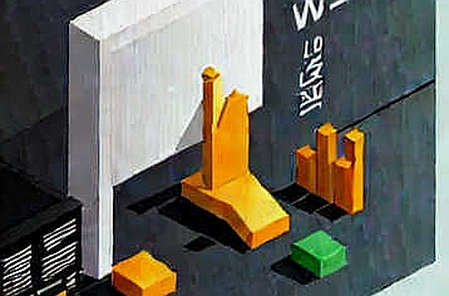
Run the transmission chain in order. First, demand expectation — the market believes AI compute demand doubles annually. Second, rental rates — neoclouds underwrite debt against contracted rental income. Third, GPU residual value — the collateral schedule assumes the hardware retains value for six years. Fourth, leveraged party solvency — when rental rates soften or residual assumptions get revised, the debt-to-collateral ratio breaks.
Each link depends on the one above it. None is independently verifiable from outside. This is why the "massive capital destruction" thesis is directionally correct even without a single number attached: the structure is fragile by construction.
The DeepSeek Variable
Wood's second pillar — cheap Chinese models — is the catalyst that makes the fragility acute rather than theoretical. When DeepSeek demonstrated frontier-adjacent reasoning at a fraction of expected training and inference cost in early 2025, it did not just embarrass a few American labs. It broke an assumption embedded in every GPU-backed loan: that capability scales with compute, and compute demand therefore scales forever.
If equivalent practical capability can be delivered at one-fifth or one-tenth the inference cost, the unit value of compute falls. Falling unit value hits the collateral schedule directly. A GPU that was underwritten against a rental rate of $2 per hour is worth materially less if the marginal inference workload can be served at $0.40.
This is the part the bull case keeps missing. Efficiency breakthroughs are bullish for the application layer and bearish for the infrastructure layer. Code doesn't care which side of the ledger you sit on. Cheaper inference expands the market for AI products while simultaneously compressing the revenue per unit of compute that services the debt. Both things are true at once. The strategists selling "AI eats everything" and the strategists selling "AI capital destruction" are looking at the same coin from opposite faces.
I watched this dynamic play out in zero-knowledge proving. When proof generation got cheap enough, the value migrated from the proving farms to the applications that consumed proofs. The farms that had levered up on specialized hardware were left holding depreciating silicon. The same migration is now underway in AI, and the leverage is larger by two orders of magnitude.
There is a subtler point buried here. The Chinese cost advantage did not emerge from a vacuum. Export controls constrained access to the most advanced accelerators, which forced the ecosystem into engineering efficiency — better quantization, better routing, better data pipelines, cheaper attention mechanisms. Some of that efficiency is a durable architectural dividend. Some of it is a workaround that a less constrained competitor could replicate and beat. The market is treating both as permanent, which is a mistake. The cost gap is real today and unstable tomorrow, and an unstable competitive advantage is a terrible thing to underwrite five-year debt against.
Where the Leverage Actually Sits
Wood's phrase "debt-heavy investment" is doing a lot of unexamined work. It implies the risk is diffuse. It is not. The risk is concentrated in a specific layer that is not the hyperscalers.
Microsoft can spend $50 billion on AI capex, see a 4% return instead of 20%, and survive comfortably. Its loss is opportunity cost. Google can do the same. These firms are funding from cash flow and can absorb disappointment through earnings, not insolvency.
The leverage sits one layer down. The neoclouds that borrowed against GPU fleets. The datacenter SPVs with project-finance covenants. The private credit funds that lent against compute collateral. The power developers who levered up to build generation capacity for datacenters that may not get built. The GPU financing arms that accept the hardware as security.
These entities have no cash-flow buffer. Their solvency is a function of two variables: rental rates holding, and residual values not getting revised. If either moves, the equity in the structure is wiped before the hyperscalers feel anything.
The 2022 crypto analog is exact. When Terra and Three Arrows collapsed, the losses did not land on the exchanges with real balance sheets. They landed on the leveraged funds, the yield aggregators, the structured products that had promised stable returns on volatile collateral. The lesson the AI credit market has not internalized: the entity that owns the collateral assumption is the entity that eats the loss, and that entity is rarely the one with the strongest balance sheet.
I want to be precise about where this bites first. In a normal credit cycle, weakness shows up in the weakest borrower. In a collateral-driven cycle, weakness shows up wherever the collateral is marked most aggressively. That means the neocloud with the thinnest equity cushion and the most optimistic residual schedule. It means the SPV whose covenant trips on a mark-to-market test nobody expected to be enforced. It means the private credit fund that lent against a fleet it cannot independently verify. The trigger is not a demand collapse. The trigger is a margin call on a number.
Circular Financing
There is a structural feature of the AI buildout that makes the whole thing harder to read, and it is the one I would audit first. Chipmakers invest in model labs. Model labs commit to purchasing compute. Cloud providers order more chips to serve those commitments. The chipmaker books revenue, the cloud provider books backlog, the model lab books capability it has not yet monetized.
Every leg of that loop is a real transaction. Every leg also depends on the other legs to justify its own valuation. When the loop is expanding, it looks like a virtuous cycle of demand. When it contracts, it looks like what it always was: a set of interlocking commitments whose apparent strength came from their mutual dependence.
This is not fraud. It is reflexive capital structure, and crypto has produced a dozen textbook examples. The ICO treasuries that held their own tokens. The DeFi protocols whose TVL was provided by their own incentive programs. When I audited failing lending platforms in 2022, the recurring pattern was that the largest "users" were entities the protocol itself had funded. The number looked like adoption. It was the protocol buying its own demand.
Liquidity mining taught the entire industry a lesson that AI capital is now relearning at a hundred times the scale: subsidized activity collapses the moment the subsidy stops, and the subsidy is always counted as growth until the quarter it isn't. AI capex is, in part, a subsidy paid to create the appearance of demand that justifies the next round of capex. The difference is that the subsidy is financed with debt instead of token emissions, which makes the unwind faster and less forgiving.
The Accounting Gray Rhino
There is a second-order risk that nobody is pricing, and it is the one I would flag first if I were underwriting this book.
GPU depreciation schedules are an accounting choice, not a physical fact. When a hyperscaler or a neocloud revises its assumed useful life downward — say from six years to four — the change flows through the income statement as a one-time hit to earnings and a step-down in asset carrying value. For a company with tens of billions in GPU assets, that revision can erase a meaningful chunk of annual profit in a single quarter.
The market has not modeled this. Depreciation revisions are disclosed in the notes, not the headline numbers. Analysts build models on the stated schedule and rarely stress-test it. When a major operator finally revises its schedule — and it will, because the physics of the secondary market will force it — the resulting earnings surprise will look sudden even though the underlying signal was visible for a year.
I have run this exact stress test on crypto infrastructure. When I audited lending protocols in 2022, the fatal flaw was always in the assumption nobody questioned — the oracle price, the liquidation threshold, the collateral haircut. The headline metrics looked fine right up until the assumption broke, and then the break was instantaneous. AI depreciation schedules are the new oracle price. Everyone trusts them because everyone else trusts them.
Code doesn't revise assumptions gently. Neither does an auditor.
The Power Layer Nobody Prices
There is a physical constraint that turns the financing risk from a valuation problem into a hard stop, and the strategist note barely touches it.
Datacenter power demand is growing faster than grid capacity can be built. That gap has produced a wave of levered investment in generation, transmission, and behind-the-meter capacity — gas plants, nuclear restarts, transmission upgrades — all underwritten against datacenter load that may or may not materialize on schedule. This is where the capital structure gets its longest duration and its thinnest margin for error.
A power project financed against a twenty-year offtake is a bet that the datacenter tenant will still exist in twenty years and still need the same load. If compute demand growth shifts from exponential to linear — which is what an efficiency breakthrough implies — those offtakes get renegotiated, and renegotiation is where levered infrastructure goes to die. The power layer is the part of the AI capital stack with the least liquidity and the most rigid covenants, which makes it the most likely place for the first real default to surface.
Contrarian: What the Doom Case Gets Wrong
Here is where I part ways with the pure doom framing, and it is not a comfortable position for someone with my disposition toward pessimism about leverage.
The "massive capital destruction" thesis assumes that falling AI capex is unambiguously bad for the broader technology complex. That is wrong, and the error is directional.
If US AI capital expenditure cools, the first-order effect is that GPU prices fall, datacenter rents soften, and compute becomes cheaper. For anyone constrained by compute access — which is to say most of the world outside the handful of American hyperscalers — that is a cost tailwind, not a headwind. The Chinese AI ecosystem, already forced into engineering efficiency by export controls, becomes relatively stronger as the global price of compute declines. The application layer, everywhere, gets cheaper inputs.
The doom framing also treats AI capex as if it were a single homogeneous bet. It is not. A meaningful fraction of hyperscaler AI spending is defensive — an arms race where not investing guarantees obsolescence. That spending has option value that a traditional ROI framework cannot capture. Wood is applying an equity-return lens to what is partly a strategic-survival expenditure. The lens is the wrong instrument.
And the third error: the doom case treats capital destruction and capacity destruction as synonyms. They are not. A datacenter that gets written down is still a datacenter. The GPUs still run. The power contracts still deliver. What gets destroyed is the paper value of the equity and debt claims, not the physical productive capacity. When crypto's 2022 leverage unwound, the hardware did not evaporate — it got repossessed and redeployed at lower cost to new operators. The AI equivalent will look the same: the leveraged owners get wiped, the assets keep computing, and the survivors buy the infrastructure at a discount.
The blind spot in the bull case is the leverage. The blind spot in the bear case is the reusability. The truth is that capital gets destroyed while capacity survives, and the entities that survive are the ones that never needed the leverage to begin with.
There is also a crypto-native angle the doom framing ignores entirely. If AI capital does get destroyed, the marginal dollar rotates. Some of it goes into hard assets. Some of it goes into the next narrative. Crypto has historically been the destination for capital that just watched a leverage cycle unwind and wants a market with less counterparty risk — which is precisely the pitch of on-chain settlement. That rotation is not a reason to be bullish on crypto fundamentals. It is a reason to be cynical about where the next wave of reflexive capital will land. The same pattern that built the AI debt stack will build the next crypto narrative, and the same depreciation-schedule optimism will dress it up as growth.
The Verifiable-Compute Angle
There is a constructive path buried in this, and it connects to work I have been doing on verifiable AI.
The core problem with GPU-backed lending is that the collateral is unverifiable in real time. Lenders cannot independently confirm that the hardware exists, that it is running, that it is generating the rental income claimed, or that its performance matches the specification. They rely on appraisals and audits that lag reality by months. That lag is what turns a soft landing into a cliff.
Zero-knowledge proofs offer a partial fix. A compute provider can generate a proof that a specific workload ran on specific hardware and produced specific output, without revealing the model weights or the data. This makes the collateral's productive output verifiable, not just its existence. I built a proof-of-concept along these lines last year — a ZK-loop that verified AI model outputs on-chain at a cost low enough to be practical. The same primitive can attest to compute utilization in near real time.
If AI infrastructure debt were underwritten against verifiable utilization rather than appraised residual value, the collateral assumption would stop being circular. The loan would be secured against proven, ongoing output rather than a depreciating guess. This is not a cure for over-leverage. It is a mechanism for making the leverage honest — and honest leverage prices itself correctly, which means it does not build the same cliff.
The industry is not there yet. Most AI compute financing still runs on trust and term sheets. But the tooling exists, and the first serious credit event will create demand for it overnight. Trust is a poor substitute for proof when the collateral is depreciating silicon. The same is true of every "decentralized compute" network currently marketing a shared resource model: the decentralization claim is only worth as much as the verification underneath it, and most of them have none. Centralized datacenter debt wearing a decentralized label is still centralized datacenter debt.
Takeaway
Watch the depreciation schedule, not the headline. The AI capital cycle will not break because a model disappointed or a demo flopped. It will break at the exact moment a major operator revises its GPU useful-life assumption downward and the revision cascades through a credit market that never modeled it. The signal is already in the secondary GPU market, where residual prices imply economic lives roughly half the length of the accounting conventions backing the debt.
The question is not whether AI compute is valuable. It obviously is. The question is whether the leverage layered on top of it was underwritten against a number that reflects physics or a number that reflects hope. When the two finally reconcile, the entities holding the depreciation assumption will discover what every leveraged crypto lender learned in 2022: the collateral was never worth what the model said it was.
Code doesn't forgive a bad assumption. It just settles the account.